
NoRA
Clients & Partners: Aalborg University, Architecture & Design; Food College Denmark
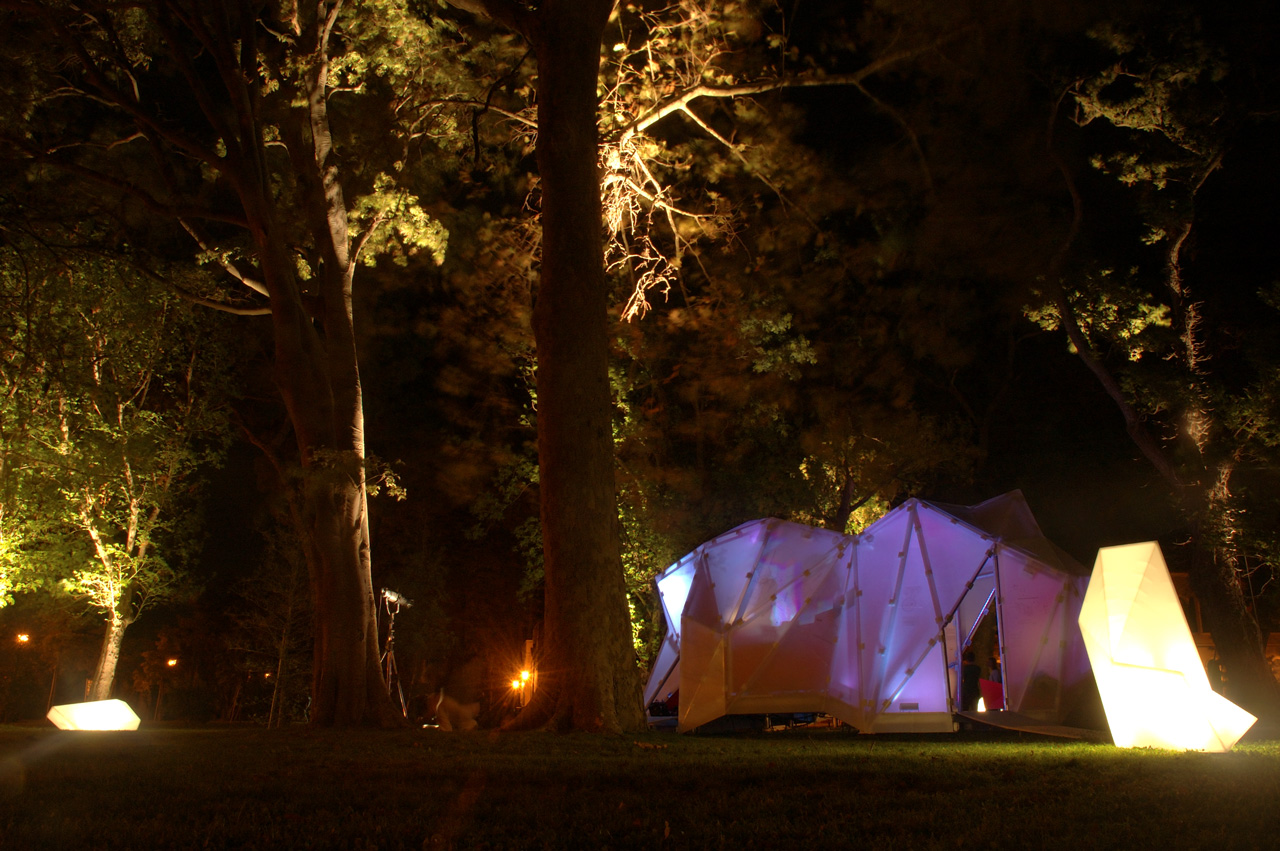
A responsive pavilion that senses, records and performs.
NoRA is a mobile, multifunctional pavilion realized for the 10th International Architecture Biennale in Venice. Conceived as an event platform rather than a fixed building, it holds, records and displays events — audio and visual — and reshapes itself around whatever unfolds inside and around it.
Rather than beginning from function and aesthetics, NoRA was designed to emerge from the interplay between people, place and live activity. A single structure reconfigures across a palette of uses — from exhibition space and workshop to intimate restaurant or open-air performance stage — adapting to the event at hand.
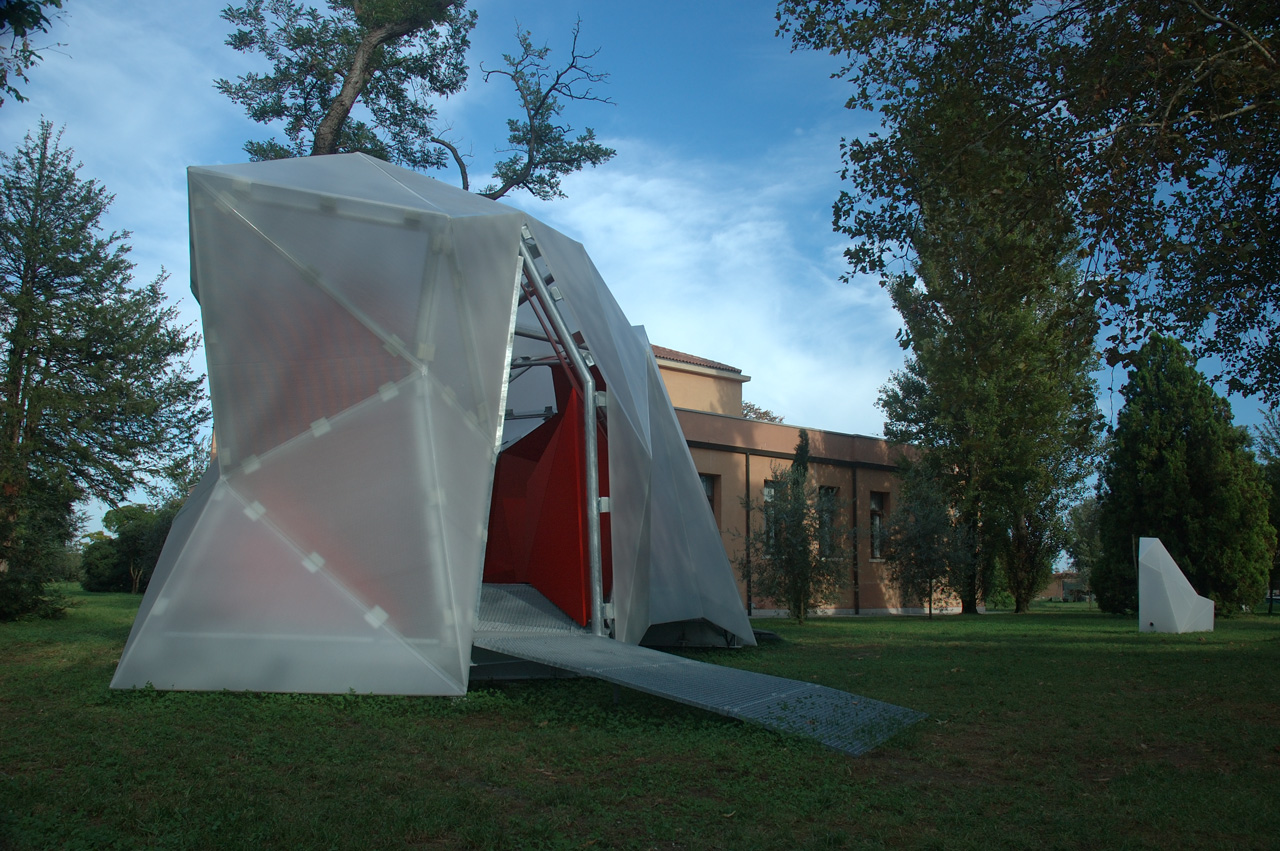
Form grown from the parameters of its site.
The pavilion's volume was generated parametrically rather than drawn. A site analysis on the Giardini in Venice mapped the movement of light and shadow across the day and the assumed flow of people through the area. These dynamic parameters were translated into desired values — shade from the surrounding trees during the warmest hours, sunlight during the coolest — and, together with a single fixed footprint of roughly 35 m², used to shape the mass.
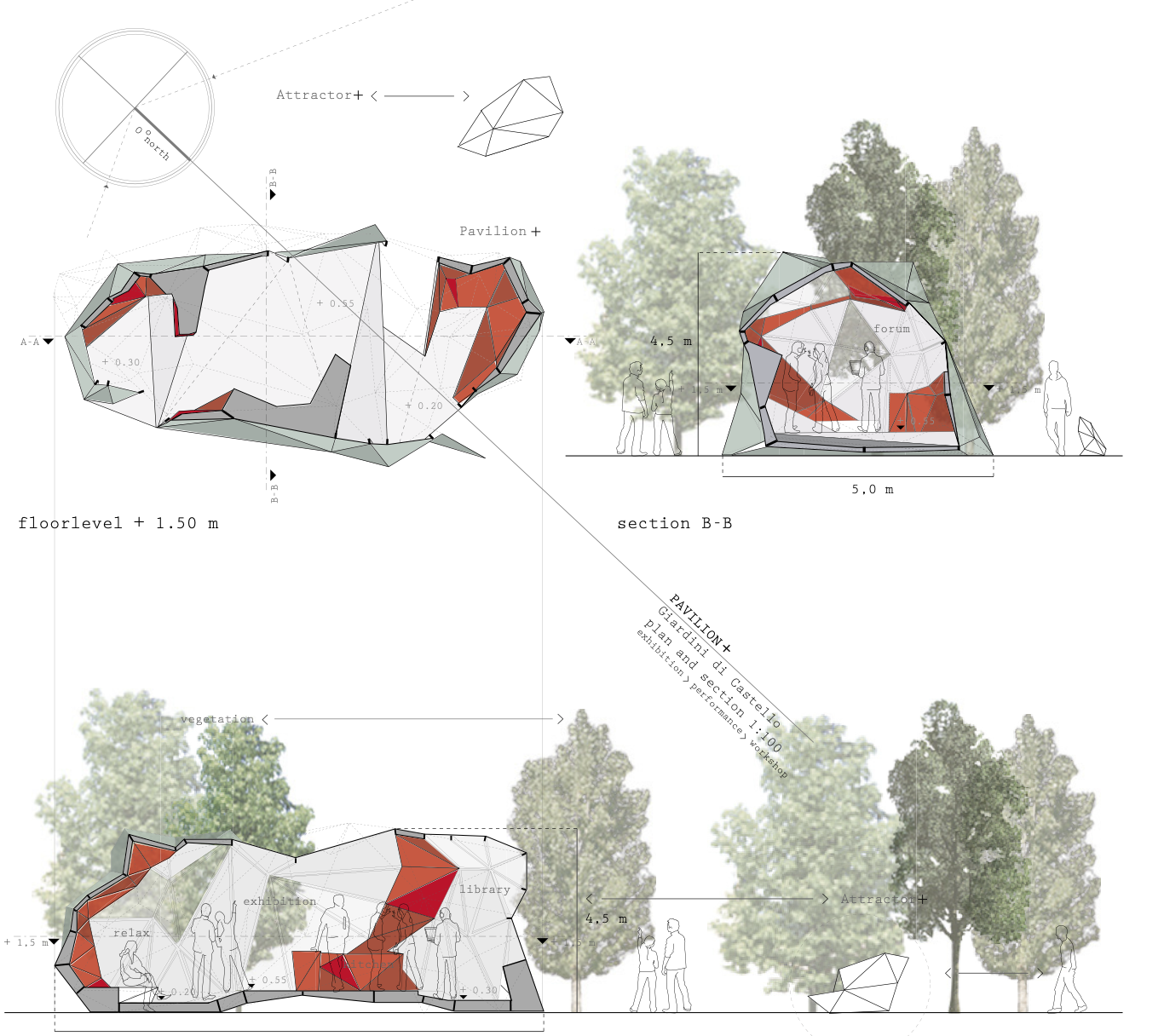
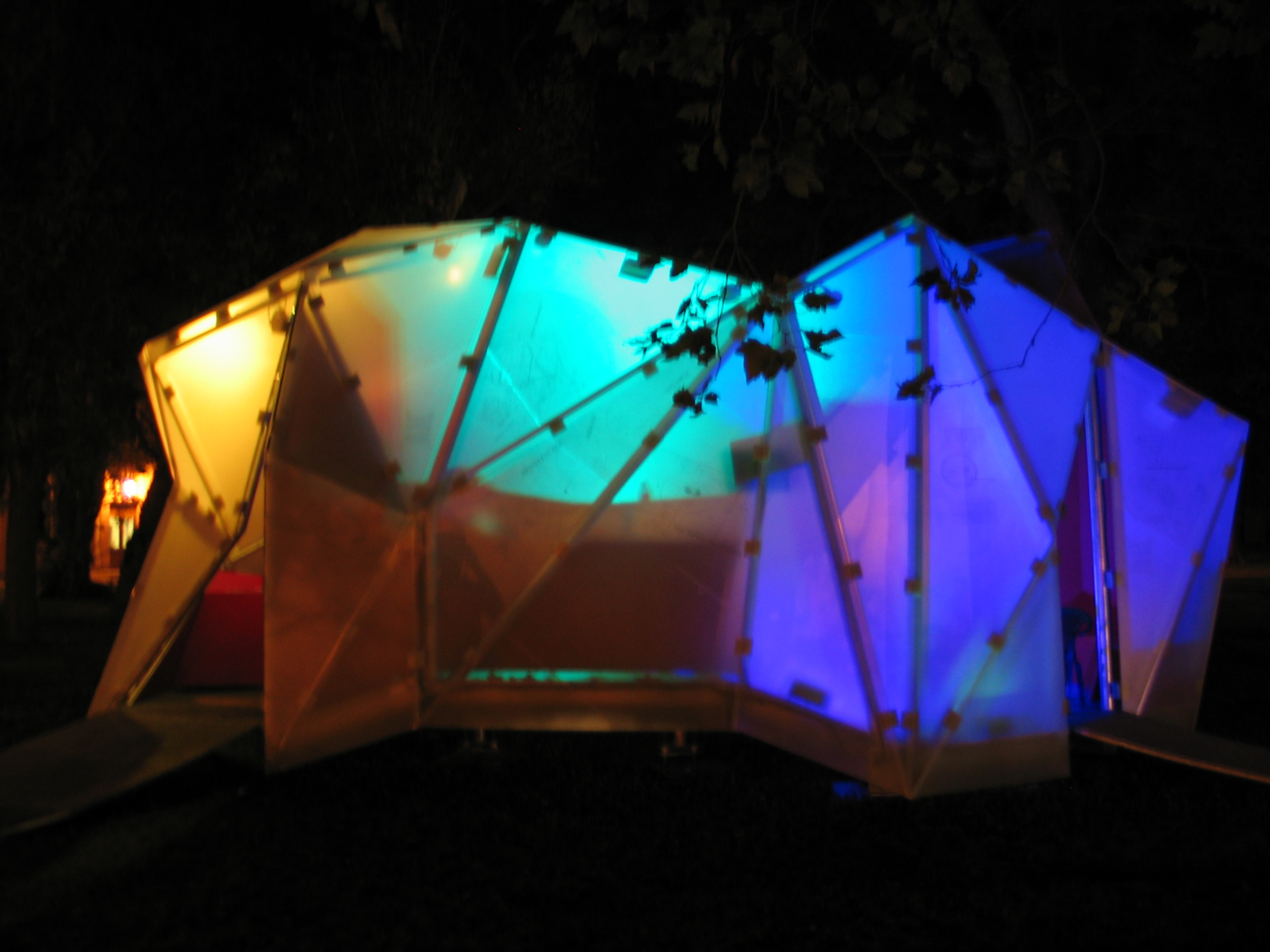
Using parametric software, a volume emitter surrounded by attracting and repelling forces was set loose and stopped by hand once an appropriate mass was reached. The resulting blobby volume was then simplified into an expressive, crystalline form. Even the simulation's 'errors' — droplets thrown off around the main body — were kept and folded into the design as satellites: external volumes that extend the pavilion's mediated softspace out into the park.
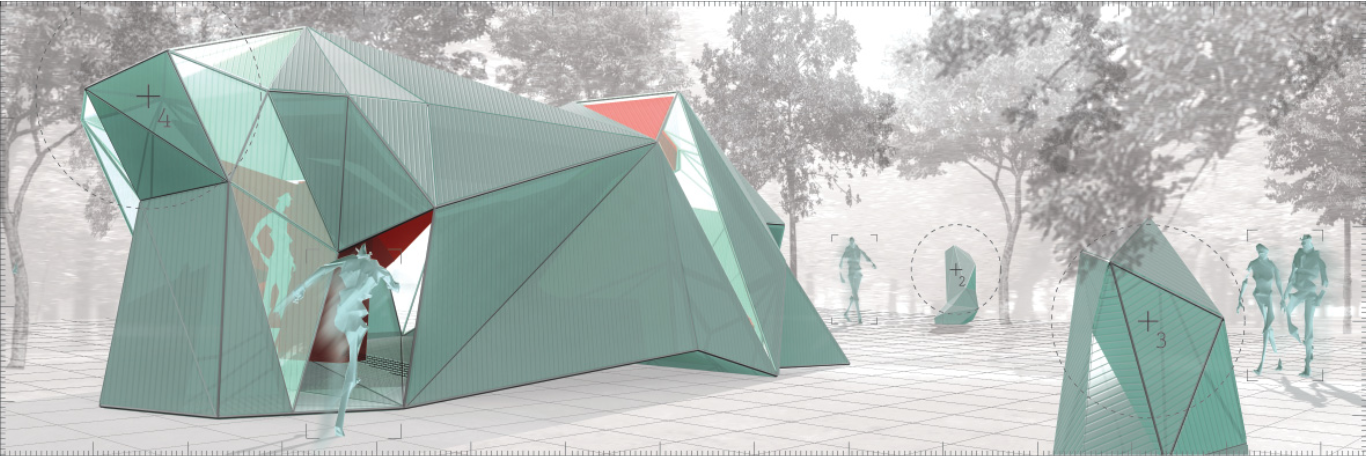
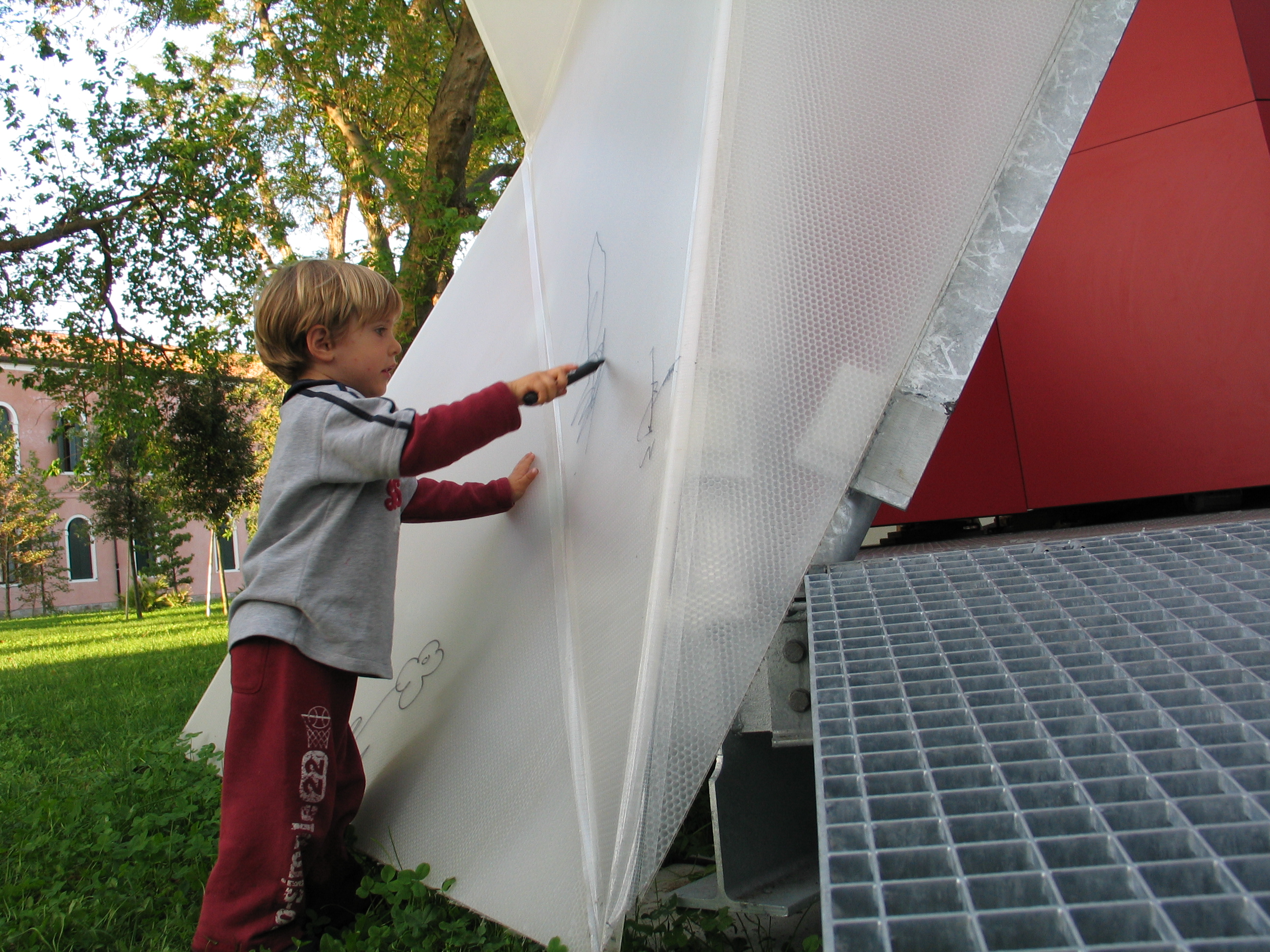
Inside, a faceted red interior folds seating, surfaces and screens into a single continuous landscape, carried on a galvanized space-frame. A common technical platform — projectors, cameras and microphones, LED and halogen lighting, speakers and real-time graphic and sound software — turns the shell into a responsive, mediated space. Movement of visitors between the pavilion and its satellites is detected with cameras, and that motion data drives the lights, projections and generated audio.
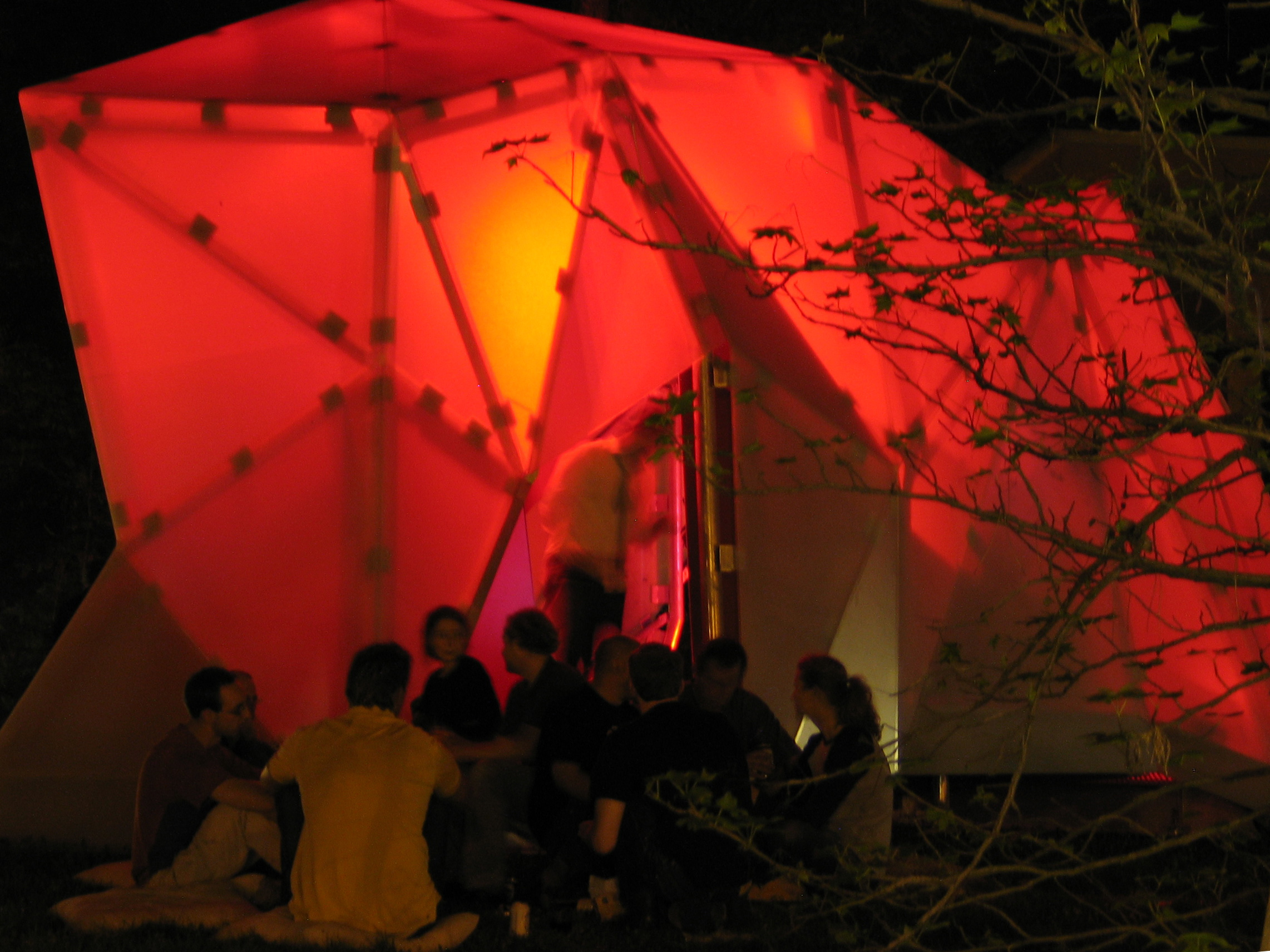
By extending its physical space into the network, NoRA links the site in Venice to a wider digital public and back again. Its interior surfaces make the unseen layers of the city visible — the movement, sound and data that pass between people — turning the pavilion into a live instrument for the events it hosts.
Contact
Place
Follow